Ukulele Chords Chart
Diagrams and fret numbers for 108 ukulele chords in standard G C E A tuning, grouped by chord type in all 12 keys.
Major chords

C
C major
G C E A: 0 0 0 3

C#
C# major
G C E A: 1 1 1 4

D
D major
G C E A: 2 2 2 0

Eb
Eb major
G C E A: 0 3 3 1

E
E major
G C E A: 4 4 4 2

F
F major
G C E A: 2 0 1 0

F#
F# major
G C E A: 3 1 2 1

G
G major
G C E A: 0 2 3 2

Ab
Ab major
G C E A: 5 3 4 3

A
A major
G C E A: 2 1 0 0
Bb
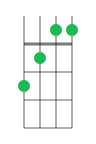
Bb major
G C E A: 3 2 1 1

B
B major
G C E A: 4 3 2 2
Minor chords

Cm
C minor
G C E A: 0 3 3 3

C#m
C# minor
G C E A: 1 1 0 4

Dm
D minor
G C E A: 2 2 1 0

Ebm
Eb minor
G C E A: 3 3 2 1

Em
E minor
G C E A: 0 4 3 2

Fm
F minor
G C E A: 1 0 1 3

F#m
F# minor
G C E A: 2 1 2 0

Gm
G minor
G C E A: 0 2 3 1

G#m
G# minor
G C E A: 1 3 4 2

Am
A minor
G C E A: 2 0 0 0
Bbm
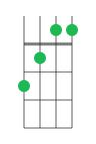
Bb minor
G C E A: 3 1 1 1

Bm
B minor
G C E A: 4 2 2 2
Dominant seventh chords

C7
C dominant seventh
G C E A: 0 0 0 1

C#7
C# dominant seventh
G C E A: 1 1 1 2

D7
D dominant seventh
G C E A: 2 2 2 3
Eb7
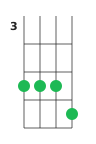
Eb dominant seventh
G C E A: 3 3 3 4

E7
E dominant seventh
G C E A: 1 2 0 2

F7
F dominant seventh
G C E A: 2 3 1 3

F#7
F# dominant seventh
G C E A: 3 4 2 4
G7
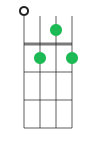
G dominant seventh
G C E A: 0 2 1 2
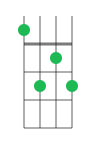
Ab7
Ab dominant seventh
G C E A: 1 3 2 3

A7
A dominant seventh
G C E A: 0 1 0 0
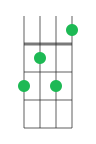
Bb7
Bb dominant seventh
G C E A: 1 2 1 1

B7
B dominant seventh
G C E A: 2 3 2 2
Major seventh chords

Cmaj7
C major seventh
G C E A: 0 0 0 2

C#maj7
C# major seventh
G C E A: 1 1 1 3

Dmaj7
D major seventh
G C E A: 2 2 2 4
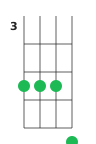
Ebmaj7
Eb major seventh
G C E A: 3 3 3 5

Emaj7
E major seventh
G C E A: 1 3 0 2

Fmaj7
F major seventh
G C E A: 2 4 1 3

F#maj7
F# major seventh
G C E A: 3 5 2 4

Gmaj7
G major seventh
G C E A: 0 2 2 2
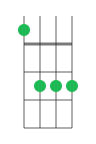
Abmaj7
Ab major seventh
G C E A: 1 3 3 3

Amaj7
A major seventh
G C E A: 1 1 0 0
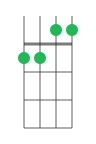
Bbmaj7
Bb major seventh
G C E A: 2 2 1 1

Bmaj7
B major seventh
G C E A: 3 3 2 2
Minor seventh chords
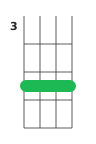
Cm7
C minor seventh
G C E A: 3 3 3 3
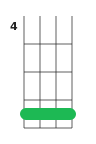
C#m7
C# minor seventh
G C E A: 4 4 4 4
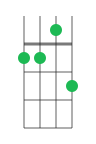
Dm7
D minor seventh
G C E A: 2 2 1 3
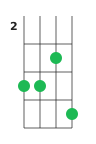
Ebm7
Eb minor seventh
G C E A: 3 3 2 4
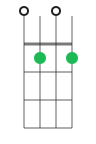
Em7
E minor seventh
G C E A: 0 2 0 2
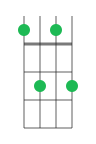
Fm7
F minor seventh
G C E A: 1 3 1 3
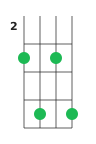
F#m7
F# minor seventh
G C E A: 2 4 2 4
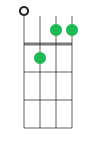
Gm7
G minor seventh
G C E A: 0 2 1 1
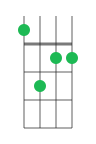
G#m7
G# minor seventh
G C E A: 1 3 2 2
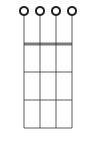
Am7
A minor seventh
G C E A: 0 0 0 0
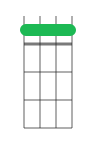
Bbm7
Bb minor seventh
G C E A: 1 1 1 1
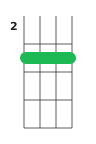
Bm7
B minor seventh
G C E A: 2 2 2 2
Suspended second chords
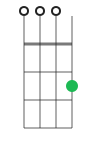
Csus2
C suspended second
G C E A: 0 2 3 3
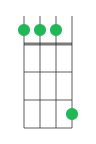
C#sus2
C# suspended second
G C E A: 1 3 4 4
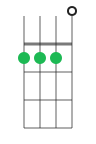
Dsus2
D suspended second
G C E A: 2 2 0 0
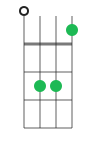
Ebsus2
Eb suspended second
G C E A: 3 3 1 1
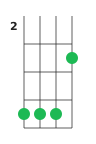
Esus2
E suspended second
G C E A: 4 4 2 2
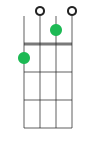
Fsus2
F suspended second
G C E A: 0 0 1 3
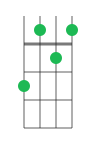
F#sus2
F# suspended second
G C E A: 1 1 2 4
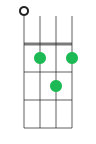
Gsus2
G suspended second
G C E A: 0 2 3 0
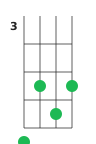
Absus2
Ab suspended second
G C E A: 3 3 4 1
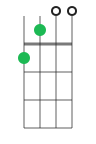
Asus2
A suspended second
G C E A: 4 4 0 0
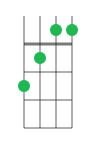
Bbsus2
Bb suspended second
G C E A: 3 0 1 3
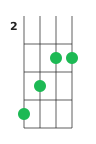
Bsus2
B suspended second
G C E A: 4 1 2 2
Suspended fourth chords
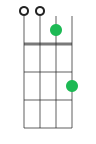
Csus4
C suspended fourth
G C E A: 0 0 1 3

C#sus4
C# suspended fourth
G C E A: 1 1 2 4

Dsus4
D suspended fourth
G C E A: 2 2 3 0
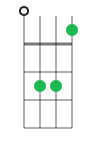
Ebsus4
Eb suspended fourth
G C E A: 3 3 4 1

Esus4
E suspended fourth
G C E A: 2 4 0 2

Fsus4
F suspended fourth
G C E A: 3 0 1 3
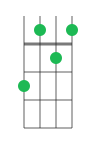
F#sus4
F# suspended fourth
G C E A: 4 1 2 2

Gsus4
G suspended fourth
G C E A: 0 2 3 3
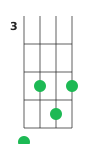
Absus4
Ab suspended fourth
G C E A: 1 3 4 4
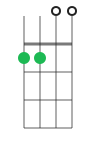
Asus4
A suspended fourth
G C E A: 2 2 0 0
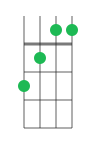
Bbsus4
Bb suspended fourth
G C E A: 3 3 1 1

Bsus4
B suspended fourth
G C E A: 4 4 2 2
Diminished chords
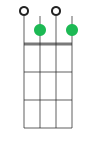
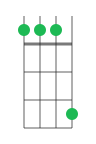
Cdim
C diminished
G C E A: 5 3 2 3
C#dim
C# diminished
G C E A: 0 4 0 4

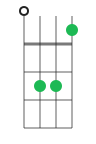
Ddim
D diminished
G C E A: 7 5 4 5
D#dim
D# diminished
G C E A: 2 3 2 0

Edim
E diminished
G C E A: 0 4 0 1

Fdim
F diminished
G C E A: 4 5 4 2

F#dim
F# diminished
G C E A: 2 0 2 0

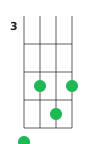
Gdim
G diminished
G C E A: 0 1 3 1
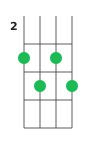
G#dim
G# diminished
G C E A: 4 2 4 2
Adim
A diminished
G C E A: 5 3 5 3
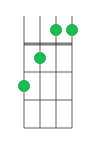
A#dim
A# diminished
G C E A: 3 1 0 1

Bdim
B diminished
G C E A: 4 2 1 2
Augmented chords

Caug
C augmented
G C E A: 1 0 0 3
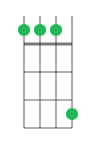
Dbaug
Db augmented
G C E A: 2 1 1 0
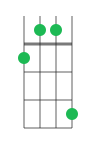
Daug
D augmented
G C E A: 3 2 2 1
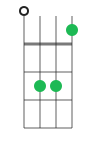
Ebaug
Eb augmented
G C E A: 0 3 3 2
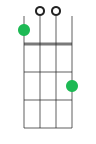
Eaug
E augmented
G C E A: 1 0 0 3

Faug
F augmented
G C E A: 2 1 1 0
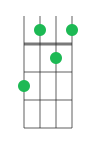
Gbaug
Gb augmented
G C E A: 3 2 2 1
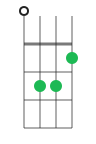
Gaug
G augmented
G C E A: 0 3 3 2
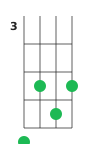
Abaug
Ab augmented
G C E A: 1 0 0 3
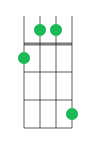
Aaug
A augmented
G C E A: 2 1 1 4
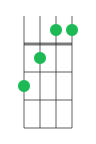
Bbaug
Bb augmented
G C E A: 3 2 2 1
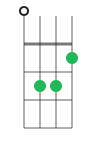
Baug
B augmented
G C E A: 0 3 3 2
How to use this ukulele chord chart
Find the chord type you need, such as major, minor or 7, and then the root. Each card shows a diagram and the fret numbers in G C E A string order: C is 0 0 0 3, which means the G, C and E strings are played open and the A string is pressed at the third fret. A circle above a string marks an open string, and a number beside the diagram shows the starting fret when the shape sits higher on the neck. Open a chord to see more positions of the same chord and the matching guitar and piano views. If your strings sound wrong, check your tuning first with the ukulele tuner.
Mastering Ukulele Chords
Understanding Ukulele Diagrams
Reading a ukulele chord diagram is straightforward once you understand the layout. The four vertical lines represent the strings in standard GCEA order, reading from left to right as you look at the instrument. Horizontal lines represent the metal frets. Dots placed on the strings indicate exactly where you should press down, while a circle at the top of a string signifies that it should be played open. If a shape appears higher up the neck, a number on the left indicates the starting fret.
Essential Beginner Chords
Most beginners find success by starting with four fundamental chords: C, Am, F, and G. These chords are versatile and allow you to play countless songs by using the popular C G Am F progression. Once these feel comfortable, you can expand your vocabulary with D, Em, A7, G7, C7, and Dm. Learning these shapes early helps build the finger dexterity required for more complex patterns later on.
Addressing Difficult Shapes
Some chords present physical challenges for new players. The E major chord is often considered difficult: the common shape 4 4 4 2 needs a barre at the fourth fret, and the alternative 1 4 0 2 needs a wide stretch. The Bb chord (3 2 1 1) needs a small barre with the first finger across the E and A strings at the first fret. To improve, keep your fingers as close to the fret wires as possible and ensure you are pressing with enough pressure to avoid buzzing, but not so much that you induce muscle strain.
The Effect of Re-entrant Tuning
Standard ukulele tuning is re-entrant, meaning the G string is tuned to a high pitch rather than a low one. Because of this, the lowest note of a chord is often not the root note. This gives the ukulele its signature light, melodic sound compared to the deeper resonance of a guitar. When playing four-note chords like maj7 or 7, every string provides a distinct tone, whereas three-note triads will necessarily double one of the tones.
Practicing Effectively
Consistency is the key to progress. Use a metronome to practice switching between two chords at a slow, steady tempo. If you find a song in a key that feels difficult to play, consider using a capo to transpose the chords to shapes that are easier to execute. Note that these diagrams are designed for standard GCEA tuning and are not suitable for baritone ukuleles, which use guitar-style DGBe tuning patterns.
Common Questions
Does this chord chart work for baritone ukuleles?
No, these diagrams are specifically for standard GCEA tuning. Baritone ukuleles are tuned to DGBe, which is the same as the four highest strings of a guitar. You would need to use guitar chord shapes for a baritone ukulele instead.
Why do some chords use all four strings for different notes?
Chords such as 7, maj7 and m7 contain four different notes, so each of the four strings plays a different chord tone. Major, minor, sus, dim and aug chords have three notes, so one of them is doubled on a second string.
What is the best way to practice chord changes?
The most effective way to practice is to use a metronome at a slow tempo. Focus on the transition between two chords, ensuring your fingers land simultaneously. Keep your fingers close to the frets to maintain clarity and minimize the physical effort required for each note.
What should I check if a chord sounds wrong?
First check the tuning, because every diagram assumes G C E A with a high G. Then press each string close to the fret wire and pluck the strings one by one to find a muted or buzzing note. A low G string changes the sound but not the shapes.