Greenhorns - Když náš táta hrál (16.2.1971) - Greenhorns
Guitar chords for "Když náš táta hrál (16.2.1971)" - Greenhorns. Country. Key: G, BPM: 167, Difficulty: Medium. D:7, G:maj, C:maj. Chord diagrams for guitar, ukulele and piano + transposition. Learn to play with Akordify.

Greenhorns' song "Když náš táta hrál" is a delightful piece that captures the essence of country music. Known for its upbeat tempo and engaging rhythm, the song is a joy to play for those who appreciate traditional country vibes. With its roots in the early 1970s, it brings a nostalgic feel that resonates with fans of classic country tunes.
The chord progression in this song is straightforward, consisting of only three chords: D7, G major, and C major. This simplicity makes it accessible for learners who are familiar with basic chord shapes. The progression follows a pattern of D7 - G - C - G, which repeats throughout the song. This repetitive structure allows players to focus on perfecting the transitions between these chords without the distraction of complex changes.
Practicing this song involves mastering the transitions between the D7, G, and C chords, which are essential for achieving the song's smooth flow. With a tempo of 167 BPM and a 3/4 time signature, players should focus on maintaining a steady rhythm, which is crucial in country music. It's beneficial to practice slowly at first, gradually increasing speed as you become more comfortable with the chord changes.
On Akordify, you can follow along with the chords synced to the video, transpose the song to any key, and use interactive chord diagrams for guitar, ukulele, and piano to enhance your learning experience.
| Key | G |
|---|---|
| BPM | 167 |
| Difficulty | Medium |
Guitar chords for Když náš táta hrál (16.2.1971) - Key G
Chord diagrams used in this song
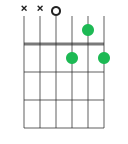
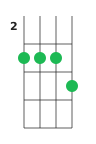
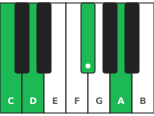
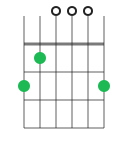
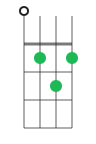
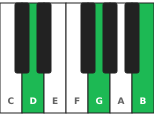
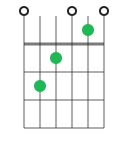
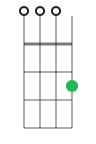
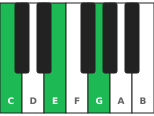
AI instrument analysis may be available for a YouTube recording. Results depend on the source audio and can vary by song. Drums from YouTube · Piano notes from YouTube
Frequently asked questions
What chords are used in the song?
The song uses three chords: D7, G major, and C major.
What key is the song in?
The song is in the key of G major.
Is this song suitable for beginners?
The song is rated as intermediate due to its tempo and chord transitions, but the simple chord progression may be approachable for advanced beginners.
How should I practice the chord transitions?
Start by practicing slowly, focusing on smooth transitions between D7, G, and C chords. Gradually increase your speed to match the song's tempo of 167 BPM.
What is the tempo of the song?
The tempo of the song is 167 BPM.
What time signature is used in the song?
The song is in a 3/4 time signature.
Does Akordify show the drum part for this song?
Some YouTube sources cannot be processed. Access, source quality, instrument prominence and processing status all affect availability. This view is useful for learning by ear, but it is an AI estimate. It may contain missed, extra or shifted events and should be checked against the recording.
Can I see the piano notes for this song?
Some YouTube sources cannot be processed. Access, source quality, instrument prominence and processing status all affect availability. This view is useful for learning by ear, but it is an AI estimate. It may contain missed, extra or shifted events and should be checked against the recording.
Similar songs
- Josef Zíma & Karel Štědrý - Milenci v texaskách (1964)
- Paramore - Brick By Boring Brick (Acoustic Cover)
- Outlandish - Aicha (Video)
- Tereza Kerndlová - Schody z nebe (Official Music Video) HQ
- lil (k)Vítek - Travička Zelená (Official Video)
- CityWorship: Happy Day // Germaine Chua @City Harvest Church
- Pixyl : อาย (ai) feat. Blissonic
- Dalriada - Ezer csillag (Hivatalos videoklip / Official music video)
Songs by difficulty · Songs for beginners · Songs by chords · Drums from YouTube · Piano notes from YouTube · Browse all songs